blog
- Home
- Blog
Warning Signs Your Old Roof May Fail Soon | Roof Replacement Guide
- Vedder Roofing
- May 20, 2026
- no comments
Your roof is one of the most important parts of your home — it protects everything and everyone inside. But like all things, roofs don’t last forever. The average asphalt shingle roof lasts 20 to 25 years, while other materials like metal or tile can last longer. The problem is that most homeowners don’t notice roof problems until it’s too late — water is dripping through the ceiling, mold is spreading, or structural damage has already set in.
The good news? Your roof almost always gives warning signs before it completely fails. Knowing what to look for can save you thousands of dollars and protect your home from serious damage.
Here are the most important warning signs that your old roof may be failing soon.
“We were looking for quotes on a new roof. Ed came out. This man found hail damage on our roof from months before! And he was such an amazing person. A man of God. He told us about his finding God any everything. He gave his quote, which was pretty comparable to the others, but he was just such a great person. Pick Vedder Roofing!! You guys are awesome!“
– Real Google Review by Brenda R.
1. Your Roof Is Past Its Expected Lifespan
The first and most obvious warning sign is age. If you don’t know how old your roof is, check your home inspection report or ask the previous owner.
Typical roof lifespans by material:
Roofing Material | Expected Lifespan | |
Asphalt shingles (3-tab) | 15–20 years | |
Architectural shingles | 25–30 years | |
Wood shakes | 20–25 years | |
Metal roofing | 40–70 years | |
Clay or concrete tile | 50+ years | |
Slate | 75–100+ years |
If your roof is nearing or past these ranges, it’s time to start planning for a replacement — even if it looks fine from the ground. An aging roof is always at higher risk of sudden failure.

2. Shingles That Are Curling, Cracking, or Buckling
Walk around your home and look up at your roof. Healthy shingles should lie flat and smooth against the roof deck. If you notice any of the following, your shingles are deteriorating:
- Curling edges — Shingles curl upward at the edges (cupping) or in the middle (clawing), usually caused by age, moisture, or improper ventilation.
- Cracking — Brittle, cracked shingles can no longer protect against rain or wind.
- Buckling — Wavy or warped shingles may indicate the roof deck underneath is deteriorating.
Curling and cracking shingles are a clear sign your roof is past its prime and vulnerable to water intrusion — especially during storms.
3. Missing Shingles
After a heavy storm, missing shingles are easy to spot. But even one or two missing shingles are a serious problem. Without full shingle coverage, rain can get under adjacent shingles and penetrate the roof deck, leading to leaks, rot, and mold.
Occasional shingle replacement can extend your roof’s life, but if shingles are consistently blowing off or falling away, it’s a sign the whole roof is weakening and may need full replacement soon.
4. Granules in Your Gutters
Asphalt shingles are coated with tiny mineral granules that protect them from UV rays and weathering. As shingles age, these granules loosen and wash off into your gutters.
How to check: Clean out your gutters and look for dark, sand-like granules collecting at the bottom. A small amount is normal. Large amounts — especially from a roof more than 10 years old — mean your shingles are breaking down and losing their protective coating.
Once shingles lose their granules, they deteriorate rapidly. You’ll likely notice bald spots on shingles when viewed from the ground or a ladder.
5. Sagging Roof Deck
A sagging roof is one of the most serious warning signs and requires immediate attention. If you look at your roofline and notice it dips, droops, or looks uneven, this could mean:
- The roof decking (the wooden boards under the shingles) is rotting or weakened by moisture.
- The structural supports (rafters or trusses) have been compromised.
- Long-term water infiltration has caused significant damage.
A sagging roof can collapse under heavy rain, snow, or wind. If you notice any sagging, contact a roofing professional immediately — do not wait.
6. Light Coming Through the Attic
On a sunny day, go into your attic and turn off all the lights. Look up at the roof boards above you. Do you see any beams of daylight coming through?
If you can see light, so can rain, wind, and cold air. Even small gaps and cracks in the roof deck are entry points for moisture that can lead to:
- Water stains and leaks inside your home
- Mold and mildew growth
- Rotting wood structures
- Higher energy bills from heat or cooling loss
While you’re in the attic, also check for water stains, dark streaks, or soft spots in the wood — all signs of past or ongoing water intrusion.
7. Water Stains on Ceilings or Walls
Brown or yellowish water stains on your interior ceilings or walls are a telltale sign of a roof leak. The tricky part is that the leak may not be directly above the stain — water travels along rafters and insulation before dripping down, so the actual entry point could be several feet away.
Don’t ignore water stains. Even a small, slow leak can cause significant damage over time, including:
- Rotted framing and sheathing
- Damaged insulation
- Mold and mildew, which pose serious health risks
- Ceiling collapse in severe cases
If you see water stains, have a professional inspect your roof as soon as possible.
8. Damaged or Missing Flashing
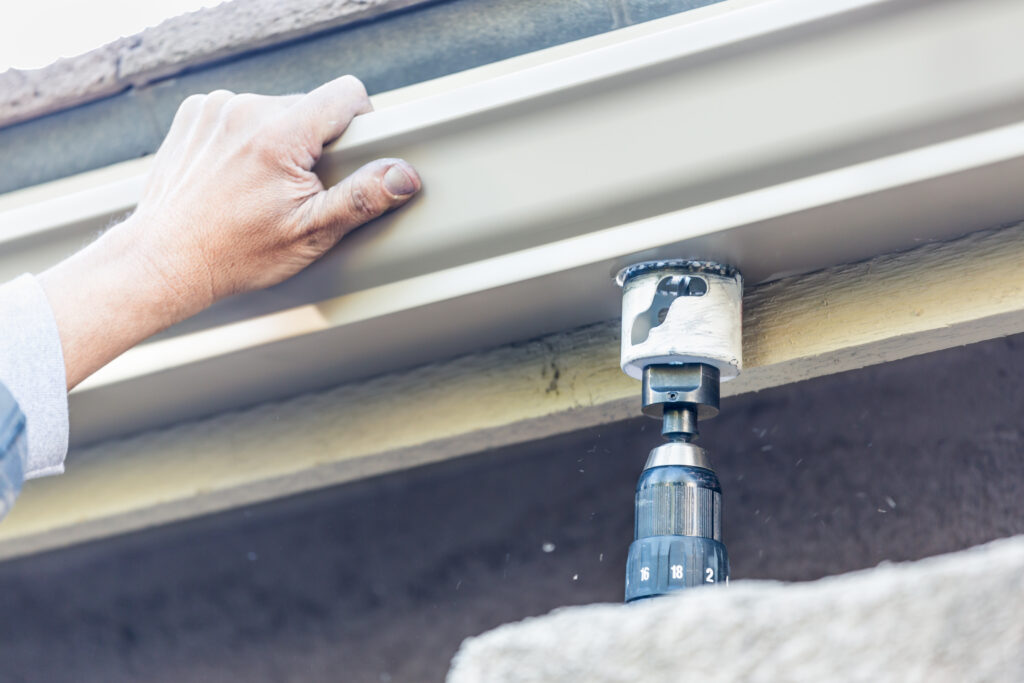
Flashing is the thin metal material (usually aluminum or galvanized steel) installed around roof penetrations like chimneys, skylights, vents, and where the roof meets walls. Its job is to create a watertight seal in these vulnerable areas.
Over time, flashing can:
- Crack or corrode
- Pull away from the surface
- Be installed incorrectly (common on older homes)
Damaged flashing is one of the most common causes of roof leaks. If you can safely see your chimney or skylights from the ground, look for flashing that appears bent, missing, or separated from the surface.
9. Moss, Algae, or Mold Growth
Green moss or black streaks of algae on your roof are more than just an eyesore — they’re a warning sign.
- Algae (black streaks) feeds on the limestone in asphalt shingles, breaking them down over time.
- Moss retains moisture against the shingles, accelerating decay and lifting shingle edges so water can get underneath.
- Mold indicates persistent moisture, which means water is likely already getting into your roof system.
A small amount can be treated with a roof-safe cleaner, but widespread growth on an older roof is a sign of deeper moisture problems.
10. Skyrocketing Energy Bills
Have your heating or cooling bills been creeping up without explanation? Your roof could be the cause.
A failing roof often has poor ventilation and insulation — either because the materials are degrading or because gaps and cracks have developed. When your attic can’t regulate temperature properly, your HVAC system works overtime, driving up your energy costs.
If your energy bills have increased significantly and you can’t identify another cause, have your roof and attic inspected for ventilation and insulation problems
What to Do If You See These Signs
If you’ve spotted one or more of these warning signs, here’s what to do:
- Don’t panic — but don’t ignore it either. Most roofing problems get significantly worse (and more expensive) the longer they go unaddressed.
- Do a visual inspection from the ground. Use binoculars if needed. Never walk on your roof without proper safety equipment and experience.
- Check your attic. Look for light, stains, soft spots, or moisture.
- Call a licensed roofing contractor. Get a professional inspection. Many roofers offer free inspections. Get multiple quotes before committing to any work.
- Act before storm season. Roof problems become emergencies fast during heavy rain, wind, or snow.
Repair or Replace?
Not every warning sign means you need a full roof replacement. Here’s a general guide:
- Repair — If the damage is isolated (a few missing shingles, a small flashing issue, minor leak) and your roof is less than 15 years old.
- Replace — If your roof is near or past its lifespan, the damage is widespread, or repairs would cost more than 50% of a replacement.
A trusted roofing contractor can help you make this decision. Always get a second opinion before agreeing to a full replacement.
Final Thoughts
Your roof doesn’t fail overnight. It sends signals — missing shingles, granule loss, water stains, sagging sections — long before it completely gives out. The homeowners who catch these signs early save thousands of dollars and avoid the stress of emergency repairs.
Make it a habit to inspect your roof at least twice a year — once in spring and once in fall — and always after a major storm. A small investment of time now can protect your home for years to come.